Then, he put the technology away.And picked up a story.
During his summer vacation in June and July 2026, Vanij spent time with the Grade 6 Jupiter class at Parikrama School in Bengaluru. Across weekly sessions, he worked with approximately 30 students on English reading, grammar, vocabulary and literature through storytelling, discussion, assignments, role-play and performance.
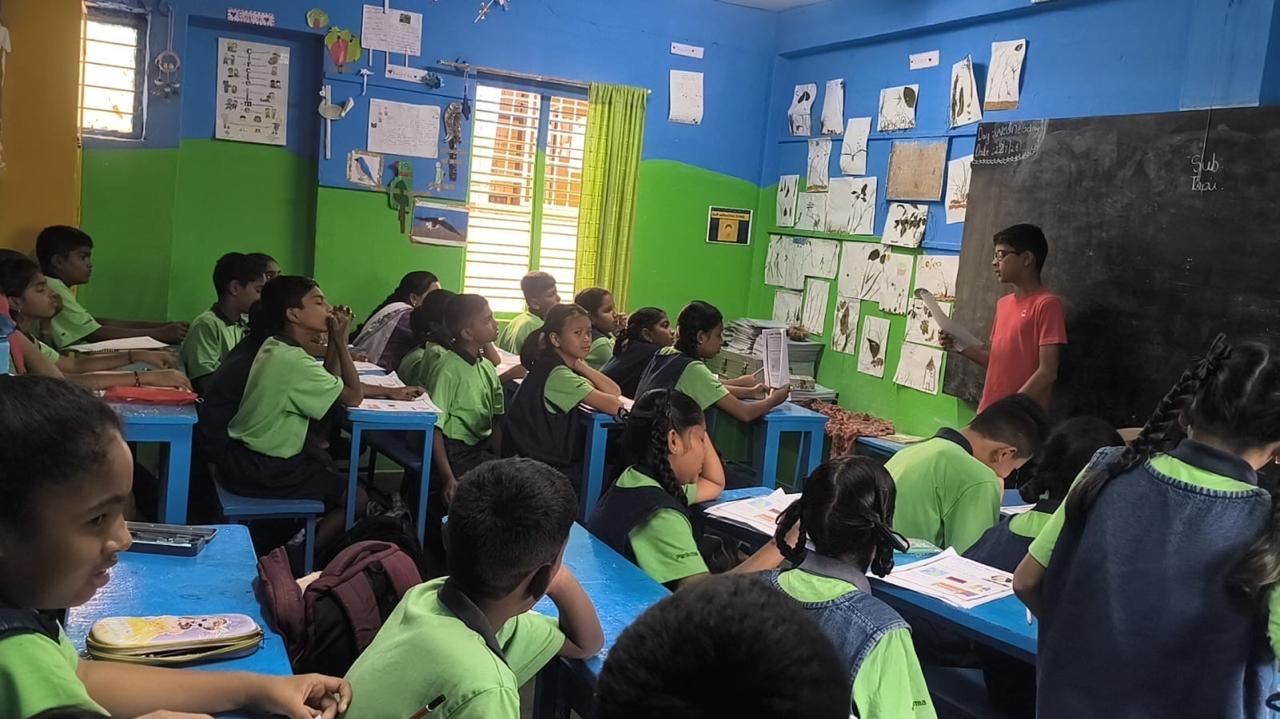
Stories became the starting point.
Vanij read and discussed the stories with the students, using them to explore English, characters, language and ideas. Robin Hood, Shakespeare and Dickens gave the class a rich collection of characters and scenes to work with.
A scene could become a role-play, a character could inspire a piece of writing, and a line from the text could become the starting point for a conversation about language.
- Robin HoodTraditional tale · retelling & role-play
- The TempestShakespeare · reading & discussion
- MacbethShakespeare · reading & discussion
- Twelfth NightShakespeare · reading & discussion
- Oliver TwistCharles Dickens · reading & discussion
He didn’t just tell the stories. He put the class inside them.
- 01
Read
English reading and comprehension, passages read aloud together.
- 02
Discuss
Questions, characters, interpretation and the language of the text.
- 03
Create
Assignments, retellings, character writing and rewritten scenes.
- 04
Perform
Role-play and enactment of scenes and characters.
Grammar and vocabulary were woven into the stories rather than taught separately. Tense, voice and punctuation came up in the sentences the class was already reading and discussing, while new words appeared in context.
By the time a scene reached the stage, the students had already read it, questioned it and worked with it in their own writing. The learning was part of the story from beginning to end.
Inside the sessions.
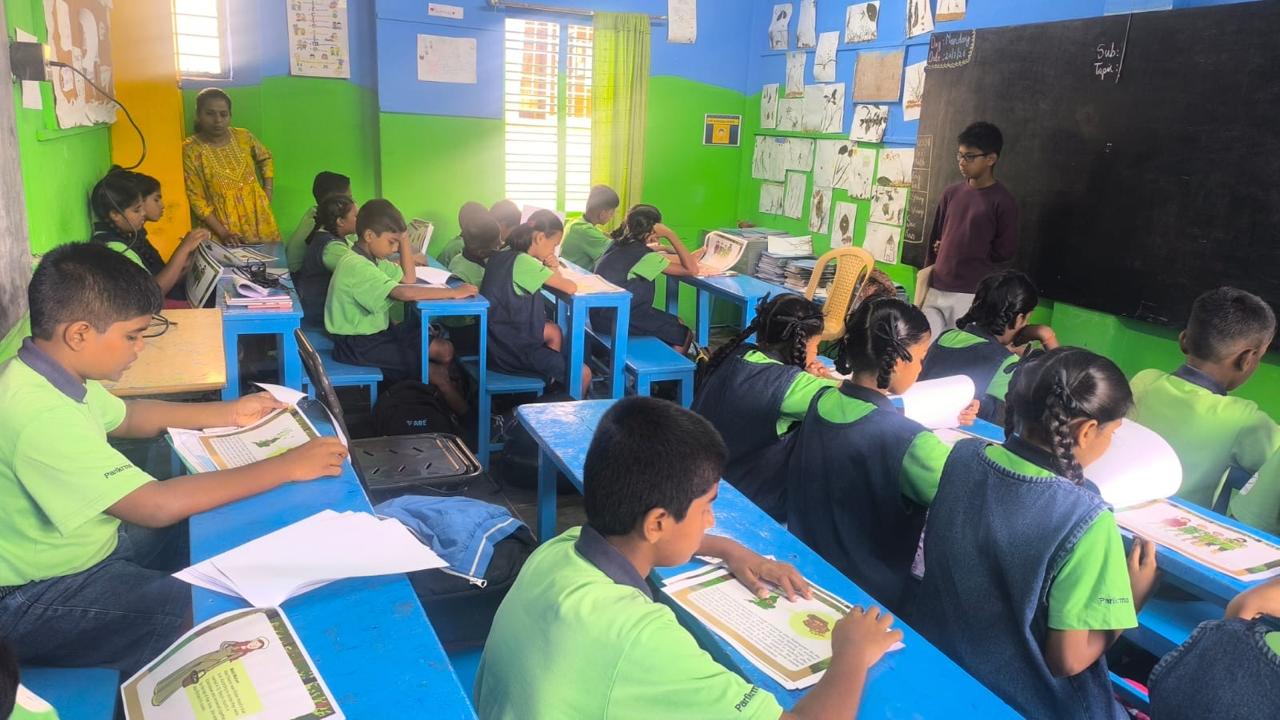
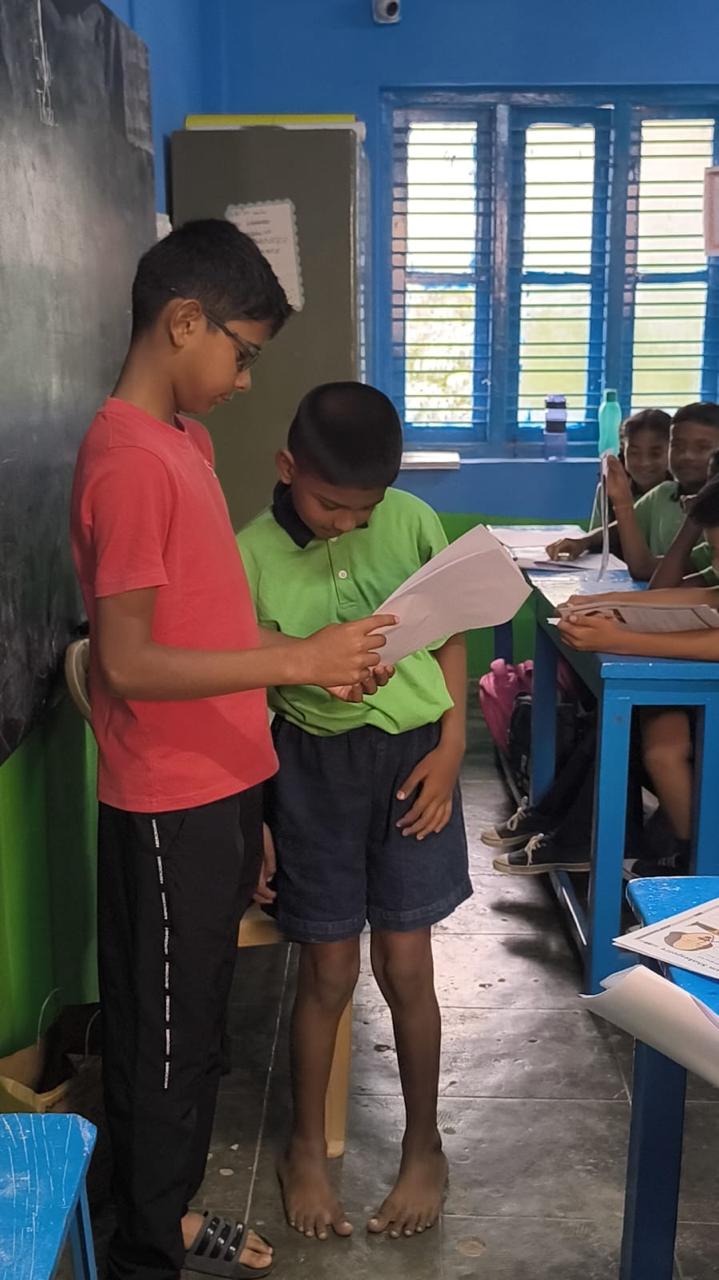
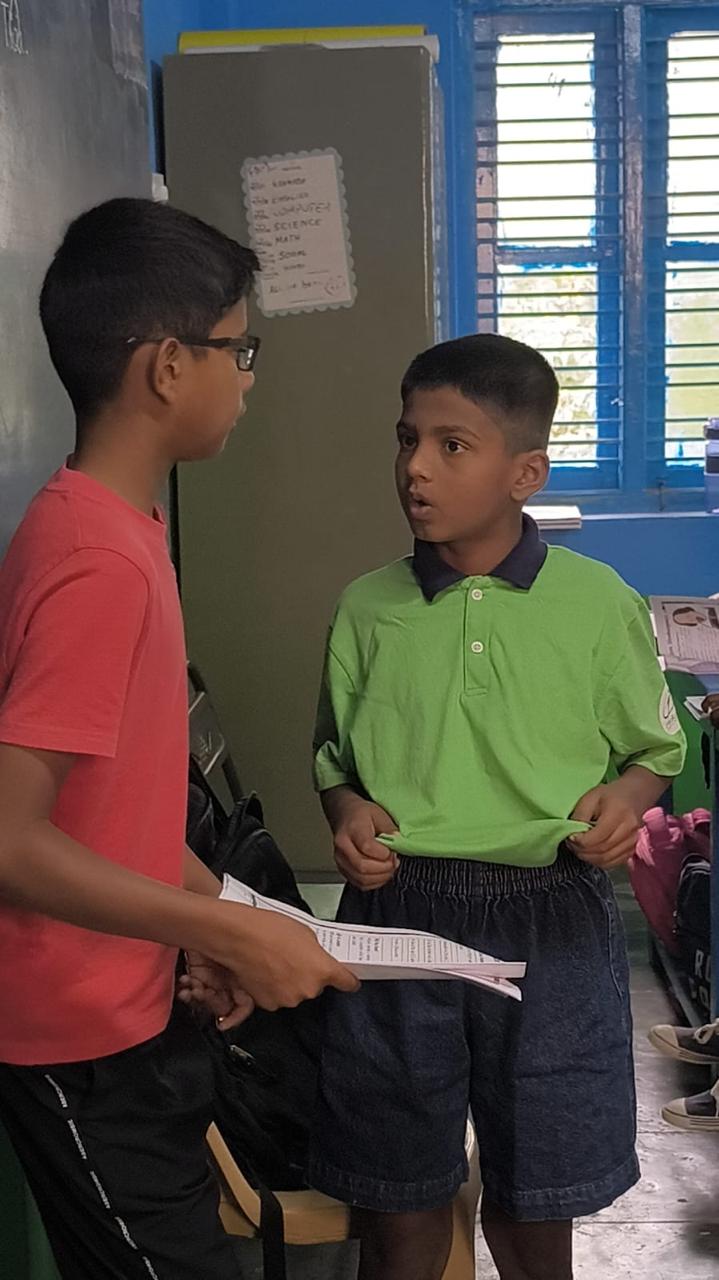
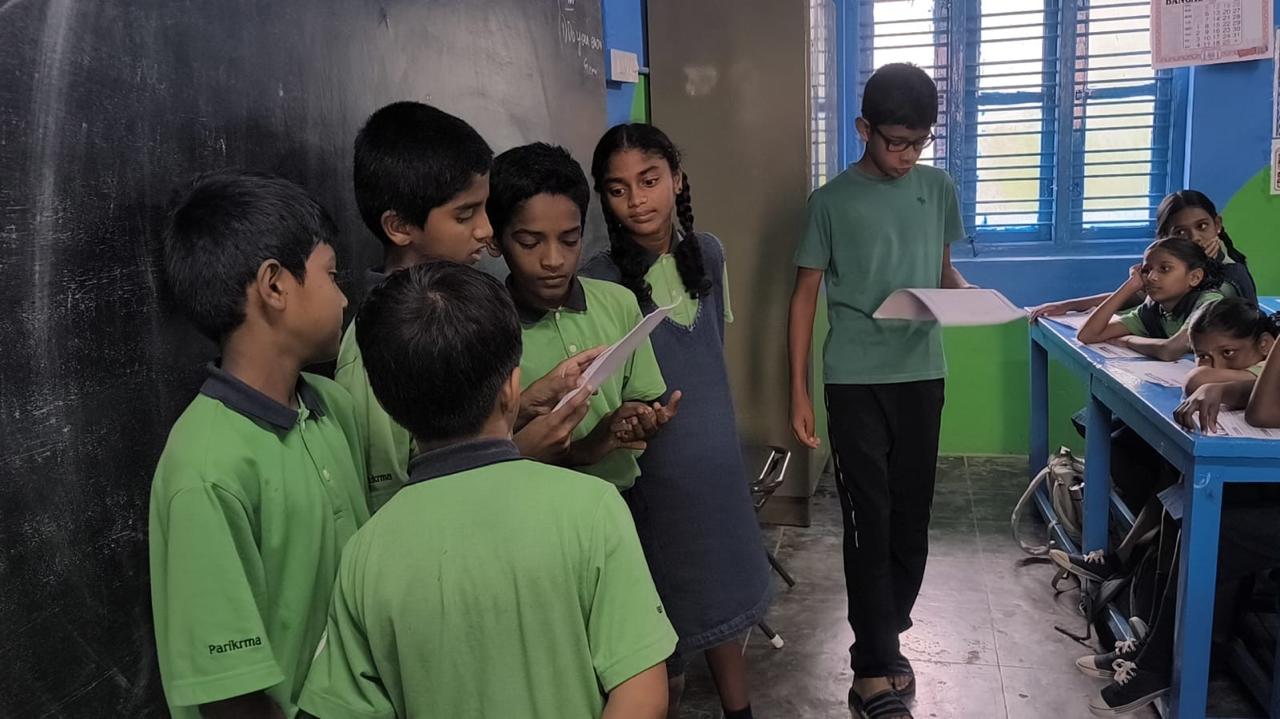
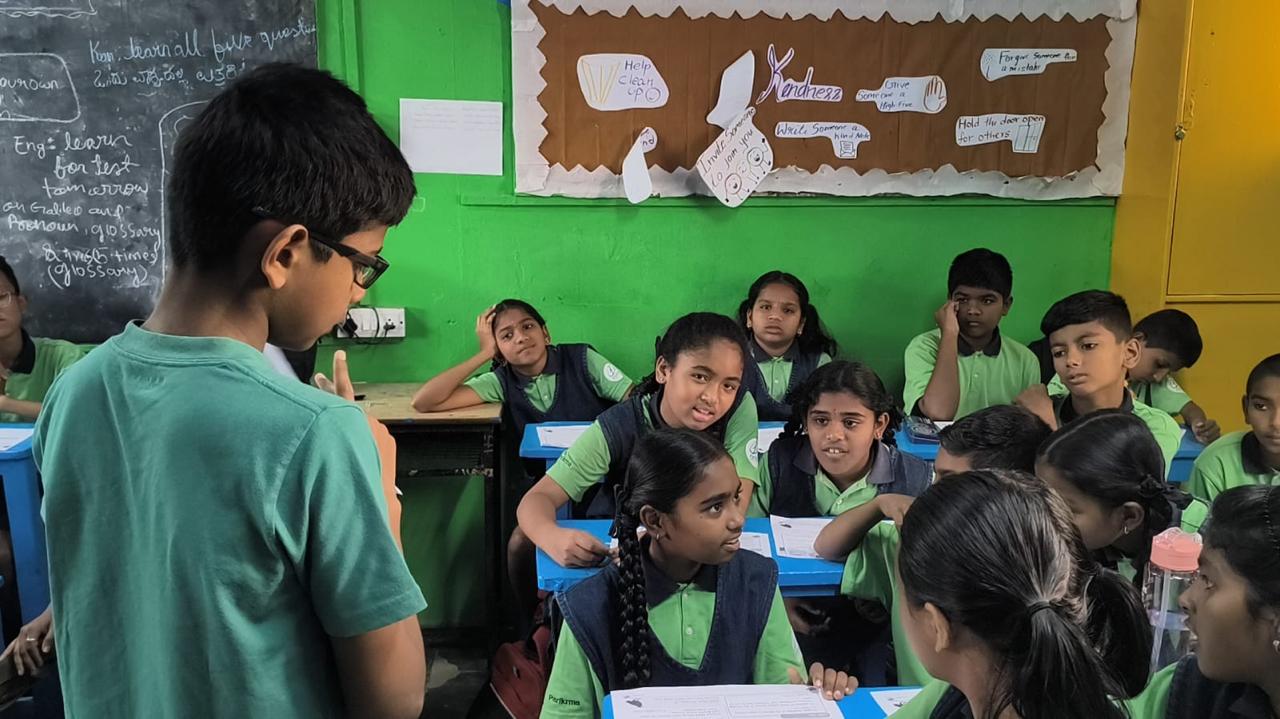
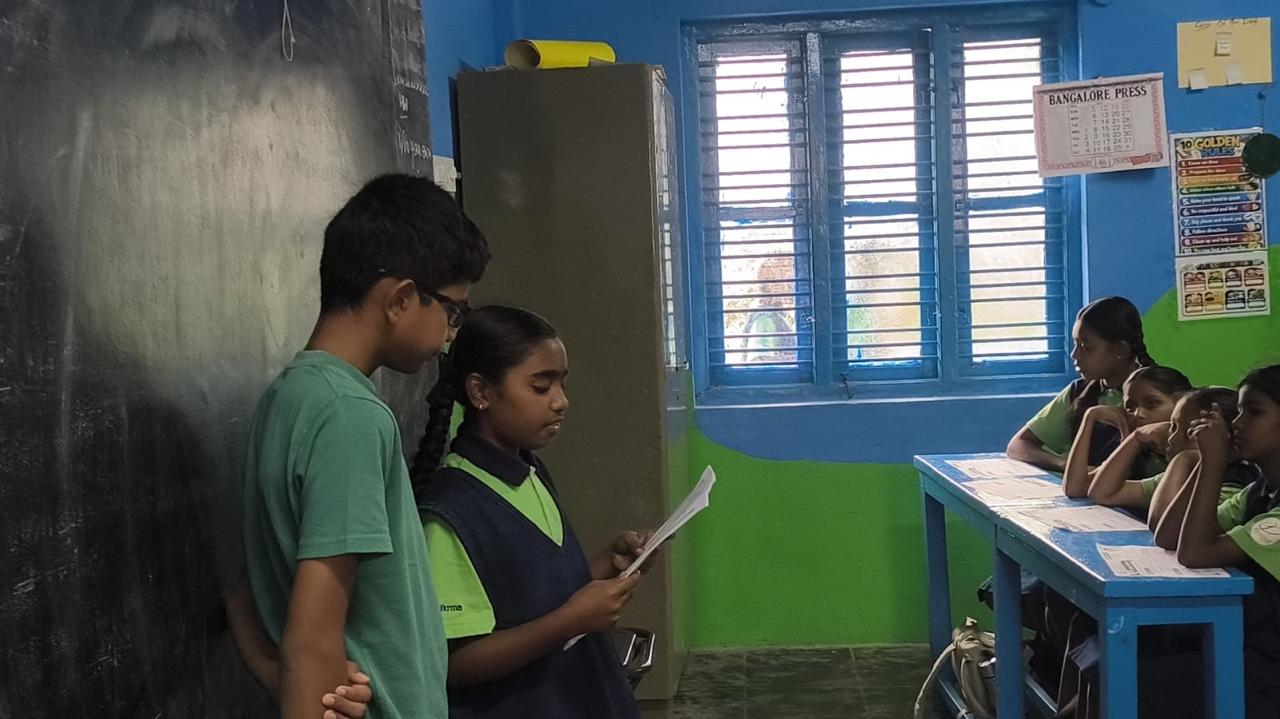
The stories continued after the reading.
Each session left the class with something to make. Students created work connected to the stories: retellings, letters written as a character, scenes rewritten in their own words, and assignments designed to reinforce English grammar and vocabulary.
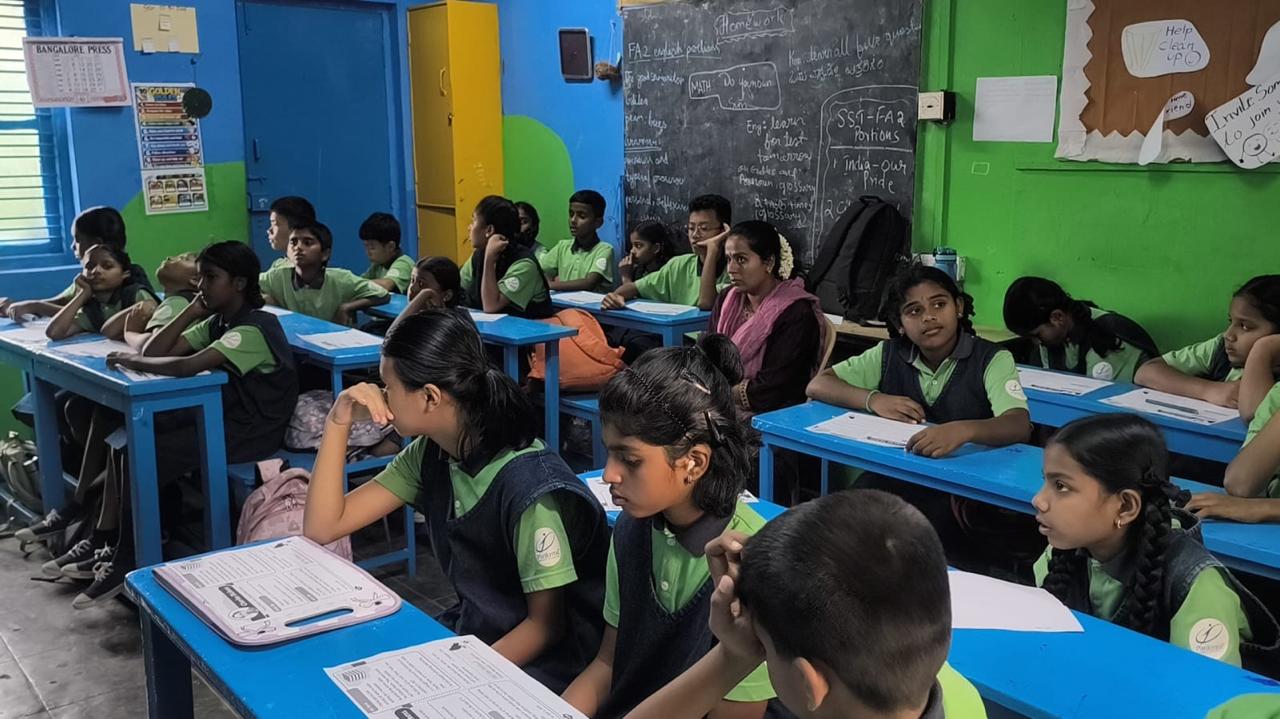
The sheets the class actually worked from.
Every session came with reading material, comprehension work or a writing task. These are the worksheets and homework sheets used across the two months — the stories on one side, grammar and vocabulary on the other.
The Tempest
A Midsummer Night's Dream
William Shakespeare
Oliver Twist & Dickens
Robin Hood
The classroom started to change.
Quieter students joined in
Some students who were initially happy to follow along began putting their hands up to read, answer questions and take on roles.
There wasn’t always one answer
When the class discussed characters, students started disagreeing with each other and explaining why. The story gave them something they could have their own view about.
The stories started showing up in their work
Ideas and vocabulary from the stories began appearing in the students’ writing and conversations. They were not just remembering what they had read; they were using it.
Performance changed the room
Once students had a character to play, even quieter parts of the class had a reason to speak. Reading became something they could step into rather than simply follow.
He went in to teach. He came away having learned too.
“I went into the classroom thinking I was there to teach. But once the students started asking questions, discussing characters and performing the stories, I realised I was learning too.
I had gone there thinking I was the one giving something, but watching them enjoy those mornings gave me more happiness than I expected.
It made me realise that learning can feel very different when you get to take part in it. I want to keep finding ways to make things more interesting and enjoyable for others too.”
Mornings in Grade 6 Jupiter.
Unedited clips from the sessions — reading aloud, handing out sheets, working at the blackboard, and students taking their turn in front of the class.
A thank you, in their own words.
A letter of appreciation.
“On behalf of Parikrma Humanity Foundation, I would like to express my heartfelt appreciation for generously volunteering your time with the children of Parikrma’s Jupiter Class. Your efforts to introduce our students to the wonderful world of Shakespeare and share your enthusiasm for literature and learning made the sessions truly meaningful and engaging.”
Two very different projects. One idea.
One began with electronics. The other began with a story. Both started with the same instinct: take something Vanij knows, and use it to make a difference to someone else.